
Key insights from NAPIC 2026

The UK’s alternative protein sector is outgrowing its own name. At NAPIC 2026 in Glasgow (14th–15th October), the conversation moved on from whether new proteins can imitate meat to how to get new protein-based products to market at scale. The challenge is shifting from demonstrating what science can produce to understanding what consumers will buy, what manufacturers can scale and what delivers genuine nutritional value.
Maha Tahiri (S2B Group) captured the mood: “Being an “alternative” makes you second best; no one wants second best.” The ambition is simply to be called “protein”. This reframing ran through almost every session, from Scottish Government’s emphasis on food system resilience to consumer research showing that sustainability is not what makes people buy alternative protein products.

People do not buy protein; they buy food. In her keynote, Prof Hannelore Daniel (Technical University of Munich) argued that the real challenge is making sure new protein foods also deliver important micronutrients and that these succeed as functional ingredients too. Her research agenda: characterise protein isolates better, including compounds that limit mineral and amino acid availability; tell producers which micronutrients each new source affects and how much to add; and understand why amino acids from plant-based preparations are less bioavailable.

That matters because substitution shifts nutrient intakes in ways consumers don’t notice. Prof Louise Dye (NAPIC PEOPLE pillar, University of Sheffield) presented findings from NAPIC’s first nationally representative Consumer Insights Survey, which was completed by over 2,000 UK adults. National Diet and Nutrition Survey data show only 4% of UK adults meet the recommended daily fibre intake, yet around 58% said they get ‘about the right amount’, 4% ‘somewhat too much’ and 1% ‘far too much’. Protein, by contrast, is already overconsumed.
The gap between intention and behaviour is just as wide. Alpro reported that 80% of people are open to trying plant-based products, but only 5% eat them daily.
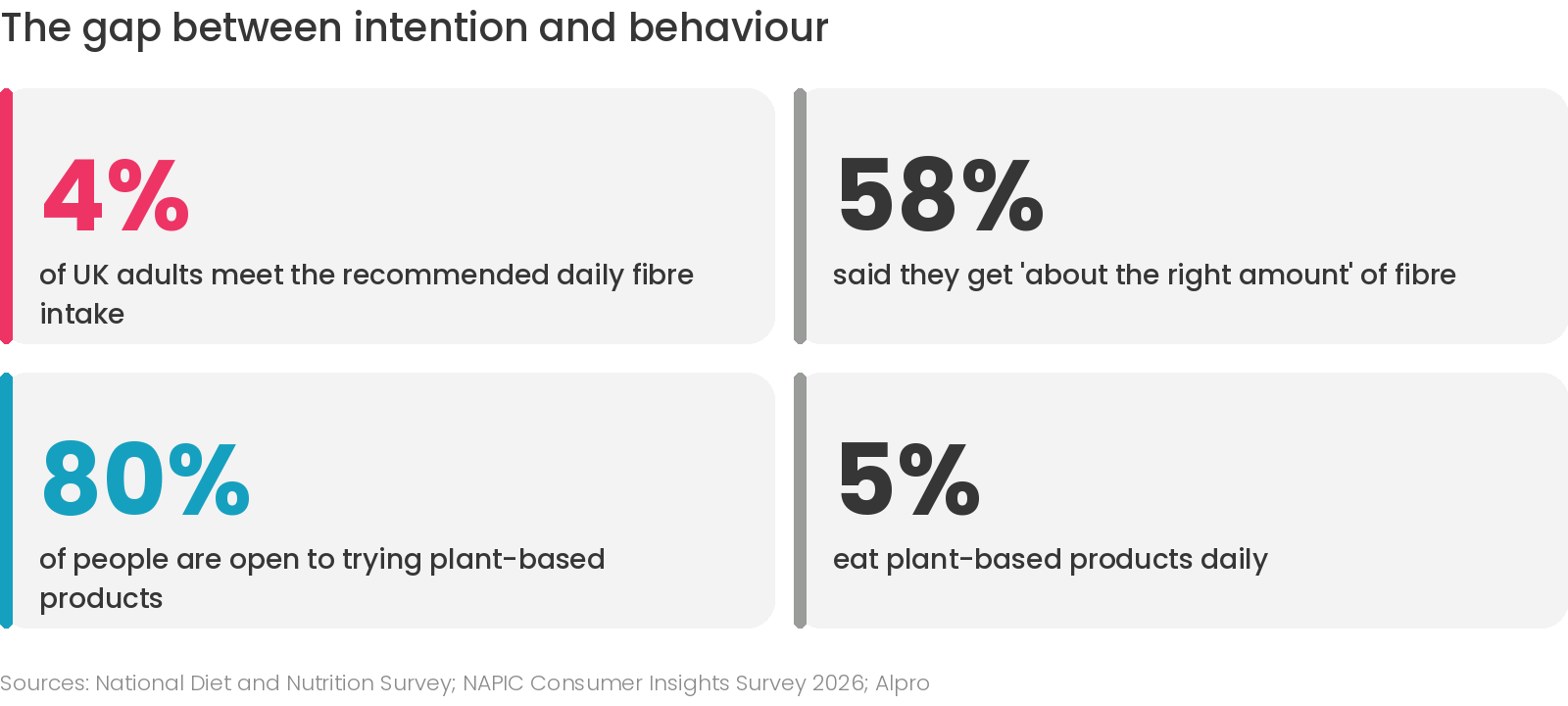
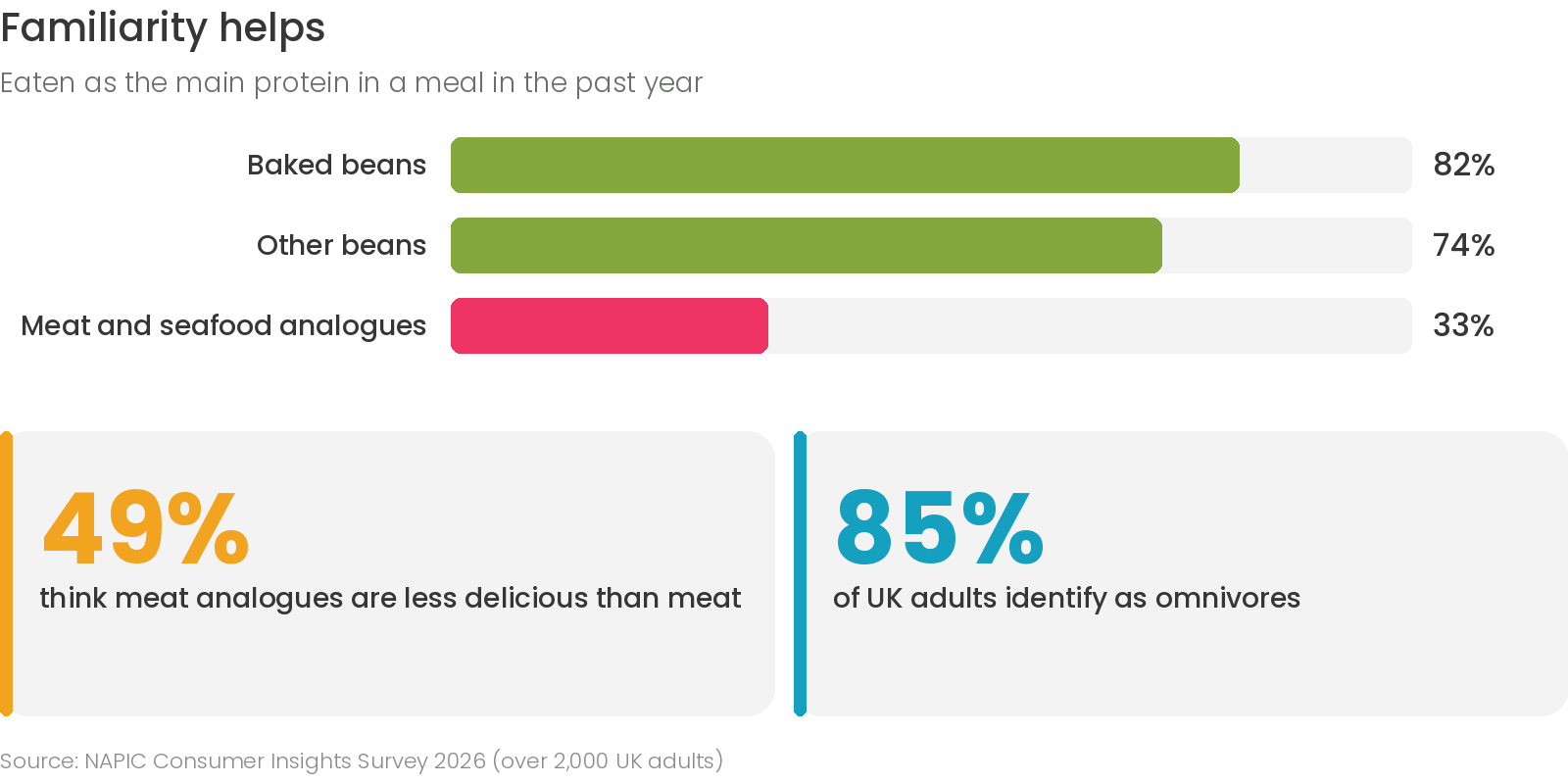
What closes the gap is the experience on the plate. In the NAPIC survey, taste, texture, cost and concerns about processing were the main reasons people gave for not eating meat and seafood analogues, and almost half (49%) think meat analogues are less delicious than meat. With 85% of UK adults identifying as omnivores, the mainstream market is people who eat meat.
Familiarity helps. People are more likely to have eaten beans than analogues: in the past year, 82% ate baked beans and 74% ate other beans as the main protein in a meal, compared with 33% for meat and seafood analogues. A NAPIC Collaborative Programme Fund (CPF) project by Prof Tom Webb (University of Sheffield) with McDonald’s found that the term used to describe the category shapes what comes to mind and how people respond: associations with “beans”, “nuts” and “health” lift attitudes.
Prof Dye set out three principles: make the target behaviour easy, work with key stakeholders, and focus on environments that reach large numbers of people. NAPIC will run its Consumer Insights Survey annually to monitor shifts, giving the sector continual insight and a representative evidence base for consumer perceptions of alternative proteins.
Ultra-processed food was discussed throughout the conference, with a strong drive to make sure science-backed, nutritious food reaches consumers in formats that they understand and appreciate. Dr Rania Abou Samra (Lesaffre) named the problem plainly: the UPF movement is emotional, and the legal definition barely matters to consumers. Humans have processed food for millennia, but that history does little to appease a shopper reading a long list of ingredients, many of which sound unfamiliar or chemical.
There is a tension between nutritional improvement and consumer perceptions of processing. Fortification can help address nutritional gaps, yet longer ingredient lists can also raise concerns among consumers. Alpro suggested that a focus on purposeful processing is needed: understanding why ingredients and processes are used, and whether they genuinely improve the nutritional quality, functionality and affordability of food.
Regulators are not all drawing the line in the same place: Dr Yvonne Dommels (The Protein Brewery) noted that biomass fermentation sits outside UPF scope in the US. Prof Hannelore Daniel called for a science-based discussion of the trade-offs between clean label and environmental burden, rather than a blanket rejection of processing.
If consumers decide with their taste buds, regulators decide with evidence. Prof Rick Mumford (Food Standards Agency), also Deputy Chair of NAPIC’s Non-Executive Board, was clear that regulatory innovation depends on independently validated science, a standard NAPIC’s research is already meeting.
Slow and fragmented regulation has a real cost. The Protein Brewery’s journey to EFSA Novel Foods and European Commission approval took six years, and Alpro named inconsistent rules across European markets as a major challenge. Long Novel Foods timelines push innovators to seek approval abroad first. In the UK, no cultivated meat or precision-fermentation dairy product has yet been authorised, and future reform could be affected by the UK/EU SPS agreement.
Safety is where trust is won or lost, and allergens are the sharpest edge. Prof Clare Mills (University of Surrey) set out two groups to protect: people with existing allergies, for whom a precision-fermented milk protein may cross-react, and others, who could develop new allergies. Early UK data suggest a shift to plant-based diets may already be increasing reactions to legumes such as lentil, chickpea and pea. With no tools yet to predict whether a new protein will become an allergen, safety science cannot trail product development: a single high-profile failure would cost the whole category more than any regulatory delay.
Resilience has always been part of the case for new proteins, but it has become far more prominent since Covid. The FSA described resilience as a term now discussed regularly across government. Prof Daniel’s distinction between land-based agriculture and contained production systems, such as fermentation, fits this framing. While contained systems are not immune to constraints, they offer the potential for more predictable and resilient supply, with less direct dependence on weather and, in some cases, imported agricultural inputs. This makes their potential contribution to future food security and supply resilience significant.
Prof Dye highlighted future challenges that the NAPIC annual survey will monitor: GLP-1RAs, geopolitical and climate shocks to supply chains and the impact on food security, and the potential allergenicity of new proteins. With food prices rising and plant-based products generally still costing more, a resilient sector has to be affordable as well as available.
Net zero still matters, but as one strand of a whole-system view. Dr Toby Townsend (RSK ADAS) is leading Defra-funded modelling, with Profs Karen Polizzi and Hanna Tuomisto, which examines how consumer choice could shape UK food system emissions to 2050, alongside wider environmental, social and job impacts. This work signals that government needs a robust evidence base, and Dr Townsend warned that looking through a single lens risks unintended trade-offs. The National Protein Roadmap fireside chat, moderated by Prof Derek Stewart (James Hutton Institute), made the complementary point: “We will not get rid of livestock.” Diversification needs to work alongside agriculture, not against it.
The protein transition also starts on the farm. Improving the quality, nutritional value and functionality of UK-grown pulses and other protein crops, and connecting growers with processors and ingredient developers, could create new opportunities across the supply chain. Protein diversification should strengthen conventional agriculture as well as support emerging technologies.
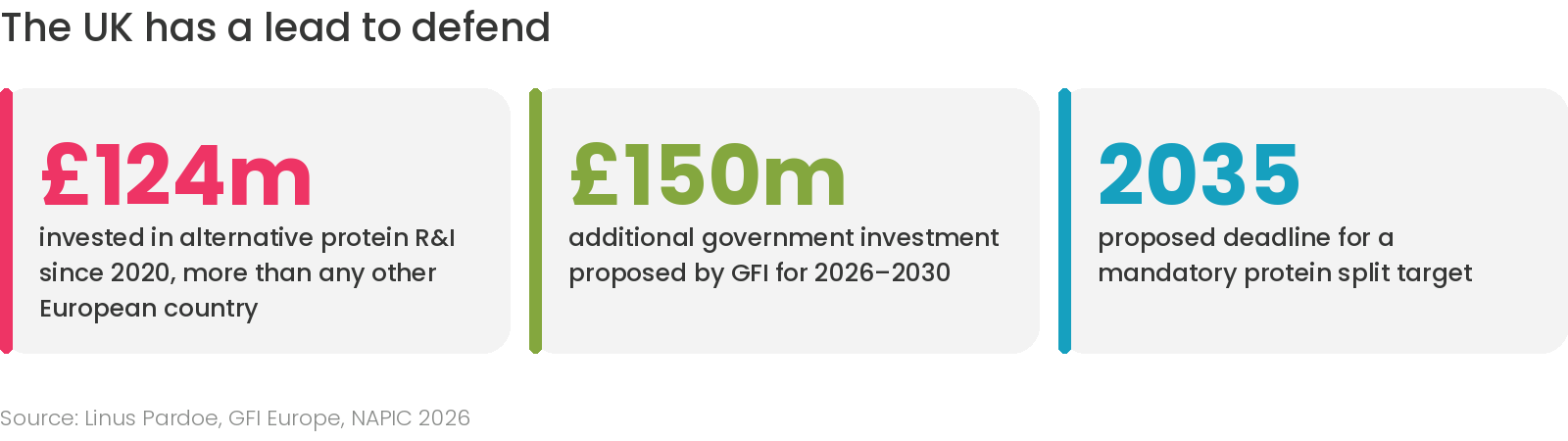
 The UK has built a genuine head start. According to Linus Pardoe (GFI Europe), it has invested £124 million in alternative protein research and innovation since 2020, more than any other European country, spanning R&D funding and the FSA’s regulatory sandbox.
That lead is not secure. GFI warned the UK is losing ground to international competitors, notably China, and is proposing an additional £150 million of government investment in science and infrastructure in 2026–2030, alongside a revised Eatwell Guide and a mandatory protein split target by 2035. Encouragingly, support for protein diversification can cross party lines, and most of what is needed does not require new legislation.
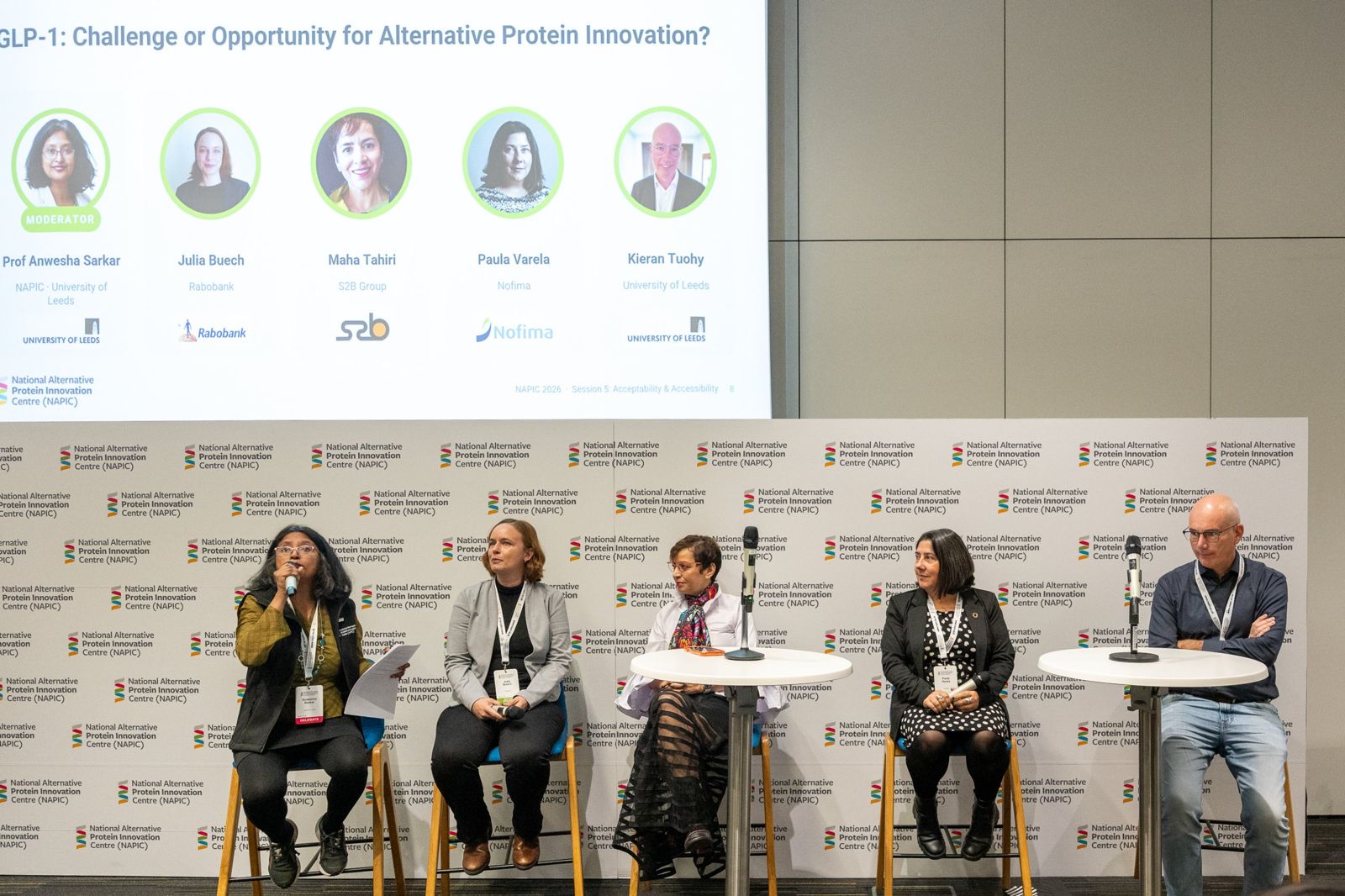
The GLP-1 fireside chat, a standout for many delegates, raised a bigger question for the food industry: what does good nutrition look like when people eat less? Panellists highlighted changing purchasing behaviours, including interest in smaller portions, nutrient dense and premium products, while recognising that GLP-1 users are far from a homogeneous consumer group.
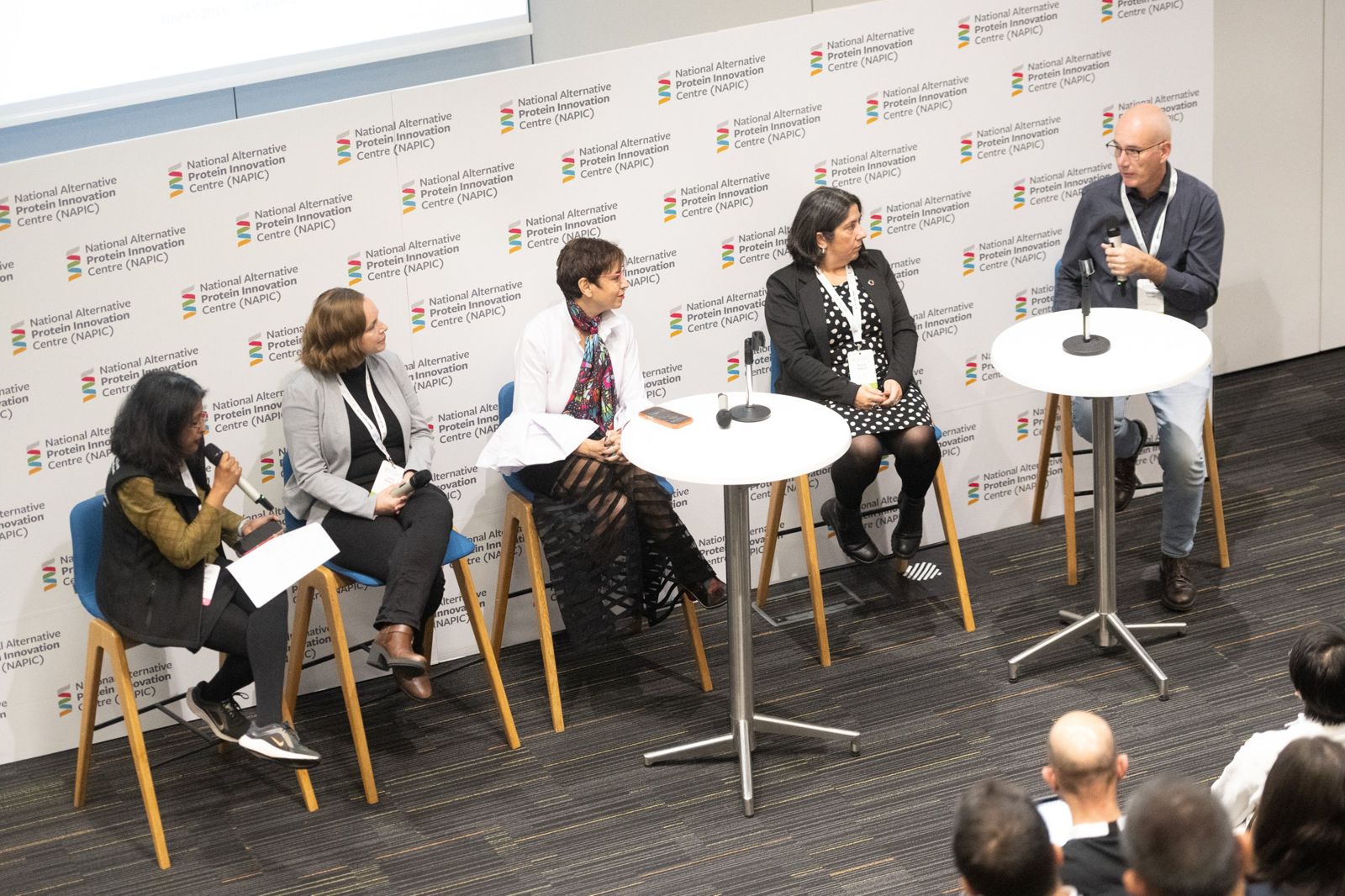
The opportunity goes beyond protein. As food intake falls, nutrient density matters more, from protein quality to fibre, vitamins and minerals. That creates room for foods with higher nutrient density, delivering more nutrition in smaller portions while remaining appealing and affordable, a shift that could influence product development across the wider food industry, not just alternative proteins. NAPIC sees clear value in understanding this growing population’s needs and supporting innovation in safe, nutritious and tasty food with enhanced nutrition per calorie.


Dr Andrew Spicer (Algenuity) put it bluntly: the bar in this sector is extremely high. The innovation journey is dictated by regulation, stabilised by demand, specified by food and beverage companies, and climbed only with scalable models.
Surviving that journey demands hard choices about capital. The Protein Brewery chose to invest in learning over capacity, built its own biomanufacturing process, and is now planning clinical trials to demonstrate the health benefits of its Fermotein ingredient: the next competitive edge is nutritional evidence. Craig Johnston (ENOUGH) raised the question every bioprocessing business must answer: what price premium will consumers actually pay?
Scale is where the UK risks losing value. Roadmap panellists warned against early-stage research happening here and scale-up happening abroad, and called for UK scale-up capacity, small-scale processing that links food and feed, and cheaper fermentation, especially downstream processing. An audience suggestion deserves follow-up: a pre-competitive forum to share what has and has not worked.
Dr Abde Arrachid (Cargill) described collaboration as combining superpowers rather than outsourcing, driven by speed, shared risk, optionality and translation, with startup pilots co-financed through EIT Food.
The real leverage may sit one step back from consumer brands. Dr Abou Samra argued that ingredient suppliers, not consumer packaged goods companies, will make the difference, and her advice was practical: make sure the innovation is robust enough for industrial scale up and the ingredient easy for a manufacturer to process and formulate. That means bringing growers, suppliers, manufacturers and retailers into the innovation process from the outset, so solutions are developed with industry rather than technologies searching for applications afterwards.
The early-stage pipeline already reflects this. NAPIC’s SEED pitches featured Cultured Color (natural colourants by precision fermentation), Velvex (premium yeast extracts for nutritionally enhanced ready meals) and AlgaPet (a dog chew from waste spirulina biomass). None of these are meat analogues.
Behind the startups, NAPIC-funded science is tackling the barriers consumers care about. Prof Anwesha Sarkar’s team (Co-Director, PERFORM Pillar, University of Leeds) used a physics-informed machine-learning pipeline to identify around 800 plant proteins resembling the dairy emulsifier β-casein in a few months rather than a year, and has already patented a clean-label emulsifier.
Taste is getting the same treatment. Prof Guy Carpenter (King’s College London), in a CPF project funded by NAPIC with Ingredion, showed that pea protein astringency comes from disrupting the mouth’s lubricating mucins, and that certain anions can block the effect. Dr Konstantinos Flevaris (Imperial College London) used machine learning to rank 16 marine fungus isolates on growth and nutrition, packaged as a tool non-specialists can run to guide food formulation.
Together, these examples point to the huge opportunity for AI in food innovation. From identifying promising proteins and predicting ingredient functionality to improving formulations and reducing experimental trial and error, AI could significantly accelerate the development of nutritious and appealing products. The real value is not simply faster discovery, but reducing the time and cost of turning scientific insights into commercially viable ingredients.
Investors were consistent about what they back. Louise Chapman of PXN, which manages around £700 million and has backed 180 businesses across the North, looks first at the management team, then market need, then a route to value. Many investors are generalists, so founders must be able to explain their science to non-specialists.
That is a gap worth closing. The investor workshop led by Eos Advisory and the Clean Growth Fund also put a strong team front and centre, and in tandem gave early-stage entrepreneurs an overview of what it takes to land investment in alternative proteins. Helping researchers become founders may be one of the highest-value things the ecosystem can do.


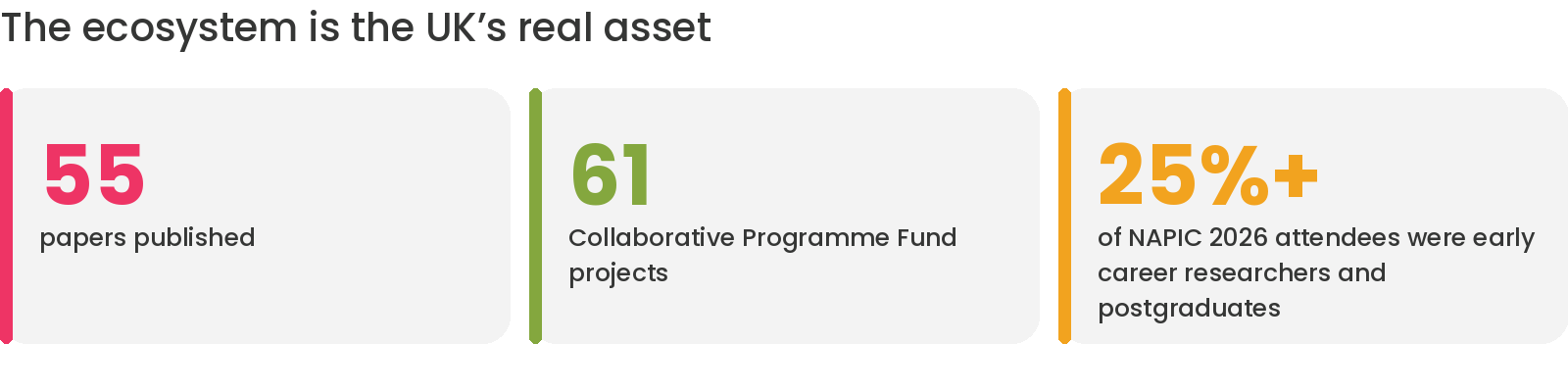
No single company or lab will carry this transition; the connective tissue between them will. A distinctive UK strength is breadth: several UK universities lead the field, whereas many countries rely on a single centre. NAPIC was built to be that tissue, and the outputs are tangible: 55 papers published, 61 Collaborative Programme Fund projects, and a venture pathway from SEED through ICURe Discover, Explore and Exploit.

Fostering the next generation of talent is central to that. Prof Daniel remarked on how much young food science talent was in the room – early career researchers and postgraduates made up over a quarter of NAPIC 2026 attendees. That pipeline is what turns the UK’s breadth across many universities into a lasting advantage.
The funding model matters as much as the funding. Scottish Government supports research through five-year rolling programmes focused on real-world impact, and NAPIC’s own model brings industry and public funding together. Thoughtful co-invested funding keeps industry and academia working on the same problems.
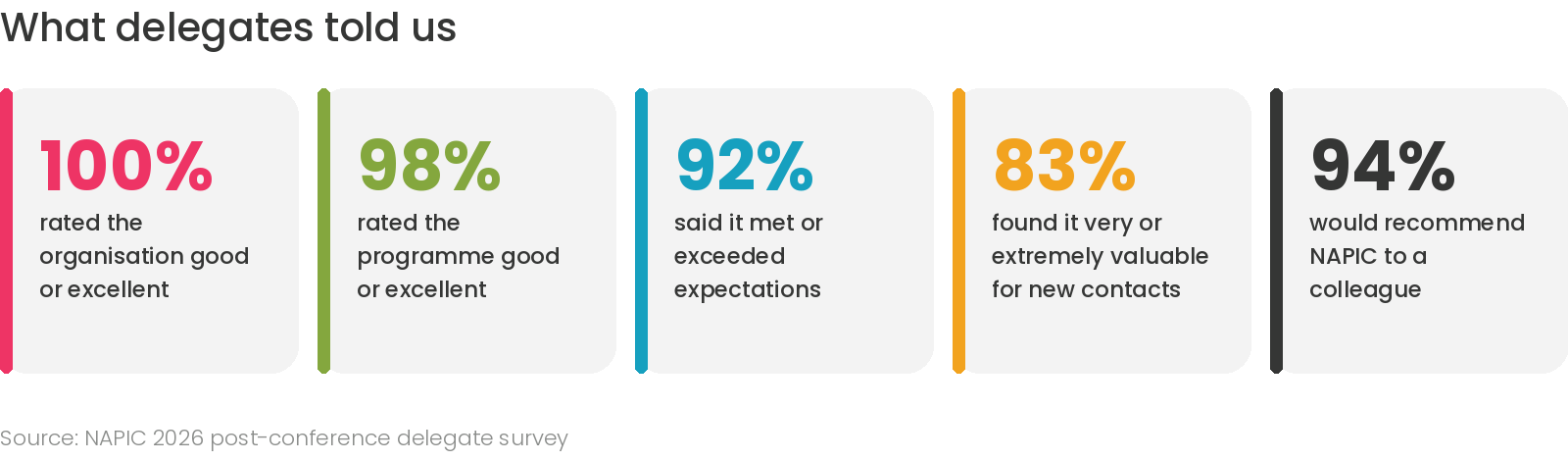
Feedback from the post-conference survey was strong: 100% rated the organisation good or excellent, 98% rated the programme good or excellent, and 92% said the conference met or exceeded their expectations. 83% found it very or extremely valuable for new contacts and collaborations, 94% would recommend NAPIC to a colleague, and collaborative R&D was the top area that delegates want to explore with NAPIC. The first phase of this sector was about proving new proteins could be made. The next will be about proving they deserve a permanent place in how the UK eats.
NAPIC 2026 showcased a sector moving beyond technological possibility towards nutritional value, consumer acceptance and commercial viability. By connecting researchers, growers, ingredient developers, manufacturers and investors, and supporting the evidence, infrastructure and collaborations they need, NAPIC can help accelerate that transition towards a protein sector that no longer needs the word “alternative”: a broad and diverse portfolio of feedstocks delivering safe, tasty and nutritious food.